- Sign In Changes: You now need to sign in using the email address associated with your account, combined with your current password. Using your display name and password is no longer supported.
- If you are currently trying to register, are not receiving the validation email, and are using an Outlook, Hotmail or Yahoo domain email address, please change your email address to something other than those (or temporary email providers). These domains are known to have problems delivering emails from the community.
Leaderboard


Popular Content
Showing content with the highest reputation on 07/31/2018 in all areas
-
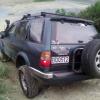
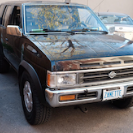
Drove it even further from home, down the Sunshine Coast, British Columbia. Trying to see how many places I can take this truck! 8k put on it this trip so far. And I still have the drive home to Ontario lol.3 points
-
So I've ordered a locker from TRE4x4.com, it took about a week and a half to get to me in NZ. The ordering is through their region rep, the service is great, but unless you know of someone else who has bought one then it could be a little nerving doing the paypal transaction The details Front Locker, part TR 202, I also got their compressor as well as I wasn't sure how the locker gets the right amount of air. The locker comes with a fee stickers and a manual for the locker and compressor wiring as well. I'm waiting for the weekend for a mate to help me install (has a TRE locker in his Suzuki himself). Photos are a bit of a mission on here, but will try post some up.2 points
-
Everyone just needs to relax and move to AZ! Send that Z my way and I won’t bribe him any more...2 points
-
It's in progress, I guess I'd say. My plasma table is here and assembled, and early (maybe mid) August still seems reasonable to have the shop ready.2 points
-
I need help figuring out whether my rear springs or shocks are blown. I'm 99% sure the KYB shock failed but I've heard the rear springs on the R50 sag with time. When we bought the car with 80k miles the KYBs were newish and we now have 130k with. The only mod is a the SF Creations 1 inch spacer on the rear shocks. Right now the left rear is about 1.5 inches lower than the right side. The left shock is also about 1.5 inches shorter. How can I confirm the shock is blown? I'd like to get something better since we do some mild off roading and camping a few times a year. Can I get the Bilstein 5100 Series Shock Absorber - 33-185552 to work? I know these are for lifted SUVs but not sure the 1 inch spacer is significant enough. Is there a 4600 that will work? Thoughts? What modifications will I have to make for the sleeves? We are also running low on the front pads... I usually get Centric rotors and a high quality sport pad on previous vehicles, but this will be my first SUV brake job. I'm trying to evaluate the following options and would love feedback from anyone who's bought these kits. I'm leaning towards EBC because of their reputation, but not sure I should drop $210 on the Greenstuff kit. + Powerstop Z36 - $160- https://www.rockauto.com/en/moreinfo.php?pk=3804288&cc=1431952&jsn=430 + EBC Stage 1 - $160 - https://www.shopebcbrakes.com/EBC-Stage-1-Street-Kit/p21?sku= + EBC Greenstuf- $208- https://www.shopebcbrakes.com/EBC-Stage-14-Light-Truck-SUV-Kit/p99694?sku= With 130k miles on it and I'm wondering if I should replace all the front hub/wheel bearings and components or just re-grease the existing. I've never owned or replaced a hub/wheel bearings so this is new territory for me. I think I can get replacements for $40 so it might be worth it while I'm in there. Is it overkill or a good idea?1 point
-
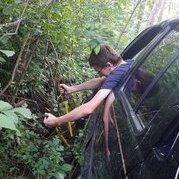
Got it a little muddy and pulled out a stuck 4 runner. Good day all ready Sent from my Pixel using Tapatalk1 point
-
Shocks aren't supposed to support the weight of the truck, so if it's sagging that much, you probably need new springs too. If you jump on the back of the truck, once you jump off, it should immediately recenter and stop. If it continues to bounce around, the shocks are blown. If you can move the shocks easily with your hands when you get them off, they're blown. I bought my truck about 10 years ago with 130k miles. The shocks failed pretty quickly. The springs seemed ok, but I installed 2 inch lift springs from A/C Customizers anyway. If I could do it over, I'd probably have used OME lift springs because I understand they are a little softer. It rides a little rough now, but it handles much better. At that time I bought some Rancho shocks that A/C Customizers said were factory fit. They weren't, but I made them work, and they are going strong today at 250k miles, so can't really advise on shocks. You don't need extended length shocks though, especially if you don't extend your rear brake lines. Your first 4wd SUV brake job will be a long and messy job compared to a passenger car. But it is entirely doable if you accept it as a learning opportunity, go slow, and use the factory service manual. I haven't used the brands you are considering. Though my ceramic pads may have been Centric. I replaced my front brake pads with ceramic about 3 years ago I think, that I bought pre-emptively about 8 years ago. I used Autozone mid-grade brake rotors. Within a year they had developed brake jidder. After research I don't really blame the rotors. I think I didn't pre-clean them thoroughly enough, and I may have pressed on the brake after some high speed hot stops, which is a no-no. I replaced them with NAPA's store brand high grade rotors, and cleaned the hell out of them with soap and water, and then degreaser, and was very careful to not contaminate them with grease when re-installing. So far, so good. Hub/wheel bearing replacement is overkill if you are able to set the pre-load correctly and don't find evidence of a spun bearing when you are in there after cleaning everything up initially. I did replace the grease seals, and used synthetic grease in one of those bearing greasing cups that pushes clean grease thoroughly through the bearing. You'll need to buy the bearing socket, or get the Ford 4 prong socket and grind off 2 of the prongs, and shape the other 2 tongs down to work on the Pathfinder. Some people also completely wing the pre-load process. I half did. I used my regular torque wrench to tighten the bearing nut down to the spec (which is very high), rotated the hub as you are supposed to, backed off the nut until it was free, and then I didn't have a torque wrench that had a low enough range to set the final pre-load. If you want to do it right, you need one that goes down to about 10 inch pounds. In the end I did it by feel. Then if you want to be able to validate you got it right, you should buy a fish scale so you can use it to measure the brake force to start the hub turning.1 point
-
1 point
-
I'd be surprised if you could tighten a timing belt enough to do that without something else failing first. Looking back at your earlier pictures it looks like it's not just the bearing that's cracked, it's the head casting it's pressed into. Good thing you've got the other set of heads on hand! I wonder if that crack was letting something (combustion gasses? Coolant?) into the head and causing the sludge buildup you found there.1 point
-
That sounds like a pretty epic journey. As a member of this forum, I think I can say on the behalf of all of us that we need more pictures!1 point
-
Yep. Since I moved out of the forest seven months ago, I have only used it one time, at Tahyua with you guys. I drive it occasionally just to keep things moving. A few months ago my son and I bought dirt bikes because there are way more trails around here for bikes vs 4x4. He really enjoys the bikes, so selling the pathy to fund more dirt bike stuff.1 point
-
I AM HIGHLY INTERESTED IN A BUMPER IF YOU COULD POST THIS IT WOULD BE AWESOME. IM THINKING MORE OF A BAJA STYLE WITH A WINCH MOUNT OF COURSE FOR THE FRONT. AND BEING ABLE TO HAVE A SPARE TIRE MOUNT FOR THE REAR I HAVE SINCE MOVED MY GAS CAR TO THE ORIGINAL SPARE TIRE SPOT.1 point
-
Ill just leave this here. -Kyle1 point
-
You want a useful chip, take a bag of doritos with you. At least you can eat them!1 point
-
Sold it. I tried to impress on the buyer the value of the forum, so maybe he will get on here and the pathy will live on.0 points
-
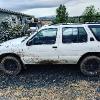
Posted the pathy for sale, so got it all washed and vacuumed.0 points