- Sign In Changes: You now need to sign in using the email address associated with your account, combined with your current password. Using your display name and password is no longer supported.
- If you are currently trying to register, are not receiving the validation email, and are using an Outlook, Hotmail or Yahoo domain email address, please change your email address to something other than those (or temporary email providers). These domains are known to have problems delivering emails from the community.
Leaderboard


Popular Content
Showing content with the highest reputation on 02/06/2019 in all areas
-
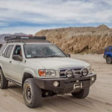
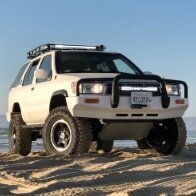
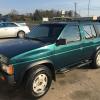
Think about how high you’d have to lift it just to go up a tire size. The wheel wells almost curve back around under the tire. And that factory “skid plate” looks like an absolute must given the ground clearance. They probably had to tow it on a trailer out to that spot to get the picture3 points
-
Sway bar links is technically a very easy job. Remove wheel. Remove two link nuts, replace. However....one nut on each side was seized and rounded off on me. I just cut them off with a sawzall since my new link came with new hardware. Didn’t take me too long. The sway bar bushings are easy as well. No press required. They are split so you just slip them over the bar and replace the mounts. 20 minutes job. Just make sure and soak everything in pb blaster a couple times a day or two in advance to get them off easier2 points
-
Since I finally learned how to post pictures, here is as far as its gotten so far..2 points
-
The issue at hand isn't exactly the height itself, per-say. The issue is the cv's being able to extend (droop) farther than they were designed to. You can (theoretically) stick as large of a lift coil you want into the strut and get as much lift as you can out of it until it (the strut) reaches it's max extension and then tops out on everything, but you cv's won't bind up. Why? They are still within their range of operation. Cv axles are designed to function within the range of full compression of the strut to maximum rebound of the strut, from the bump stop all the way until top out (+- some wiggle room). There are certainly other factors that influence this, like wear and tear, but your cv's will never bind up and blow out. It's spacers that are the problem. Since a spacer adds lift on TOP of the strut, rather than within in, you're basically extending the total amount that your wheels can drop past the limit that the car was designed to operate within. A spacer around an inch or less is usually okay, just because of that extra wiggle room, but anything over that will allow your cv's to drop past what they are capable of handling. That's why I will never ever even consider using any sort of spacer over an inch on any vehicle that I plan on actually using. Sure, if you literally never touch anything besides smooth and perfect pavement, a spacer probably won't give you any problems. However, most of us on here have built our rigs to go to pretty much the opposite of that. Running any spacer over an inch is going to hurt your performance and make your car worse off road, not better. Like Dean said, if you plan on ever driving off pavement, you're not gonna want to rely on spacers.2 points
-
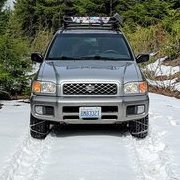
Finally got some snow in the PNW Sent from my SM-G960U using Tapatalk2 points
-
[mention=39745]StPickens[/mention],[mention=41155]Astrorami[/mention] & myself have all taken slightly different approaches to this problem with the Rola V-Tech rack. I wanted elevation to allow cam strap hooks on the lower 1” diameter Rola bar &[mention=39745]StPickens[/mention] preserved his sunroof deflector. Without elevation, @02_Pathy had some sunroof function complications.1 point
-
Since you’re only one state away I could give you my current front springs + strut setup if I ever end up going with ac springs for a bit more height in the front Sent from my iPhone using Tapatalk1 point
-
Just a heads up....they guy that owns jackson motor sports has stated that that was their original prototype and it works pretty much as well as the one they were selling. I made one last week from 6 dollars worth of 1 1/4 angled steel. It’s working great and is one of the better mods I’ve done to my pathy1 point
-
It's still on the factory crossbars. I explained it on the last page. I also flipped the roof rack mounts upside down, I think I left that out.1 point
-
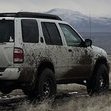
"... looks as rugged as its name sounds!" Well, if the name sounds like a light rock cover band in a hotel lounge, then yeah, that's about right. They clearly tried to make a Subaru. And look at that approach angle! My mom's CRV has better clearance than that!1 point
-
Definitely, the time will come to replace the oem parts. I highly suggest you guys give these two guys a shot at making you an awesome pair. Easy lifetime maintenance, you can’t go wrong. Sent from my iPhone using Tapatalk1 point
-
Yep, this setup has been used frequently enough to give it some decent backing. @mjotrainbrain Used it, though he had a heavy front bumper. @micahfelker uses HD coils with a .75” spacer and also has a custom front bumper. People have tried to do AC coils with a 1” spacer, but the results in that were far more varied. Way more issues with camber and binding. I’m not sure if anyone has blown a CV with the OME and 1” spacer. The other idea that’s been infrequently circulated around the forum is only dropping the front diff by an inch or less. Few have done it, and for those who have, few details have been given. But I’d guess for anyone dead set on a 3” lift, a custom diff drop would have to be in order as opposed to fighting camber and CV issues.1 point
-
With a coil spring lift, the struts don’t bottom out, they “top out”, meaning they reach their maximum extension more easily. This is most noticeable over speed bumps or uneven road surfaces where the roadway ahead drops more than a couple inches. Of course, it happens while off-road also. The topping-out sound can be disconcerting to those who don’t know what it is, but it has never seemed to affect reliability or performance on my R50, and I’ve had the 2” springs for 20 years. While it’s true that a 2” subframe drop is probably ideal to avoid the risks associated with simple strut spacers as well as mitigate strut topping out concerns, a 2” subframe drop doesn’t make a whole lot of sense labor-wise. Simple 2” strut spacers (with or without subframe spacers) cause significant positive camber, which may or may not be wholly correctable using camber bolts. Keep in mind that an appropriately sized steering adapter will also be needed. If lifting 2” for the sole purpose of fitting 32” tires, I believe that the expense and time investment is not a good value. It might be cheaper and simpler to lift only 1 or 1.5” with OME springs, and trim the wheel wells or fender flares to fit 32’s. I suppose that it really depends on the reason why one wants to install 32” tires. For on-road use and looks only, just get strut spacers and camber bolts. For mild off-road use, get a mild coil spring lift and trim. For rugged off-road use, get 2” coil springs. Unlike a simple subframe lift, a spring lift raises the IFS/steering rack crossmember as well as provides wheel well clearance for larger tires. That provides more ground clearance under the front suspension. Just my opinion, based on nearly 200,000 miles and 22 years owning my R50 and wheeling it hard.1 point
-
What method did you go for mounting low-profile? I'm just curious since there's a couple. I've used the conduit clamp method in the past, but it was a bit too low for me.1 point
-
1 point
-
I was gonna say I know that road! lol Kent, when are you gonna come visit Montana?!1 point
-
Just a bit1 point
-
Check and make sure the nut on the strut piston is torqued under the full weight of the truck on a level surface. If this step is missed and the strut piston nut is only tightened while there is no weight on the suspension it can cause clunking when the strut cycles to full extension. The nut and washer on the piston hit the strut tower after a brief moment of being lifted above the strut mount from the compression of the suspension. Open your hood, push down on the vehicle watch for movement on the nut and strut piston. There should be none.1 point
-
Could be the top mounting hardware of the strut; either assembled incorrectly or damaged.1 point
-
LBJ-Lower ball joint Sent from my SM-N950U using Tapatalk1 point
-
I went to a race one time that was ALL Dodges and nobody won.1 point