
- Sign In Changes: You now need to sign in using the email address associated with your account, combined with your current password. Using your display name and password is no longer supported.
- If you are currently trying to register, are not receiving the validation email, and are using an Outlook, Hotmail or Yahoo domain email address, please change your email address to something other than those (or temporary email providers). These domains are known to have problems delivering emails from the community.
Leaderboard

Popular Content
Showing content with the highest reputation on 09/15/2023 in all areas
-
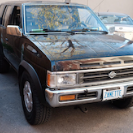
Wet clutches are controllable, viscous couplings are not. Viscous couplings are just a stack of plates with thick oil between them that makes it hard for them to move one independent of the other. Half of the plates go to the input, half to the output, alternating, so when the coupling is forced to slip, all the oil across all the surface area of each of the plates (except the two on the ends) fights it. The wiki writeup on them says the oil gets thicker the more it heats up, so the more you beat on it and force it to slip, the harder it fights back. It's got enough slip to avoid torque bind, but it fights back enough to put power down when you need it. It has no external controls. A wet clutch is more like the clutch in a manual transmission vehicle (except that it's soaked with oil). An external force (in this case fluid pressure on a piston, supplied by the pumps, controlled by the computer) clamps the plates together, causing friction between them. Clamp them hard enough and they don't slip at all. It's the same tech that grabs gears in automatic transmissions, and I think it's common in motorbikes and quads, too. Usually they've got a bunch of plates, like the multiplate clutches used in some sports cars, though the exploded diagram for the ATX14A shows a smaller number of plates than I would've expected. Technically the wet clutch could slip when clamped completely up, same as a dry clutch, but I imagine you'd have to hit it pretty damn hard to break the static friction unless it was wore slap out or you were hitting it with way more power than it was designed to take. AFAIK auto mode won't lock the clutch completely, so no, it shouldn't torque-bind if you're gassing it through a corner. The viscous is a far simpler solution, but I imagine it did not play well with the ABS/traction control, or Nissan didn't like its road manners (might be more prone to understeer). The computer-controlled-clutch solution meant they could make it behave however they wanted. I've seen similar computer-controlled wet-clutch transfers in domestics of the same era (BW4405 in an Exploder, NP236 in an S10 Blazer), so it wasn't just a Nissan thing. That is a lot for a filter. If you haven't, google the Nissan part #--if that quote came from a dealer, you may find it cheaper online. If it's like the filter for the trans, it may be more of a screen than a filter, and easy enough to clean out. Worst case, I imagine the transfer case would have to be absolutely shredded to shed enough material to clog the filter. New fluid is a good idea, though. Did a world of good for the TX10A in my '95. Make sure you get the right stuff!1 point
-
I believe most people just weld some metal tabs and use studs with big wingnuts to hold it on (and a lock if you leave it there). Not sure if these are still made but another option:1 point