- Sign In Changes: You now need to sign in using the email address associated with your account, combined with your current password. Using your display name and password is no longer supported.
- If you are currently trying to register, are not receiving the validation email, and are using an Outlook, Hotmail or Yahoo domain email address, please change your email address to something other than those (or temporary email providers). These domains are known to have problems delivering emails from the community.
Leaderboard



Popular Content
Showing content with the highest reputation on 05/12/2020 in all areas
-
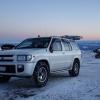
Finally got out to do a little “soft roading” didn’t even use 4wd but was good test of suspension and handling. Installed 32” LED bar up on the rack platform I have 4 LED pods I haven’t decided where to install yet, any suggestions?3 points
-
My nephew as well, loves the Pathfinder and thinks that it is quite fun to drive up the 45 degree slope towards the cottage through the trees and over the rocks. I just need to make a rear e-brake line for the disc-brake rear axle and have the frame repaired before I give it to him on his birthday in a few years. Should be a hoot to see him driving it around for the first while!!1 point
-
I would tell you to pull the starter but I don't think you have that much time on your hands AND it's probably the ignition switch anyway!1 point
-
Utah! Sent from my iPhone using Tapatalk1 point
-
At least you figured it out. LOL. Sent from my SM-G950U using Tapatalk1 point
-
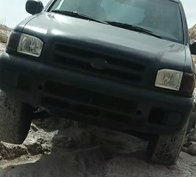
Posted this on FB but keep forgetting to post it here. Got good and stuck a few weeks ago. Ending up calling my buddy with a winch after several failed attempts from passerby's. Had 8" of water in the cab at one point but managed to drive home 11 hours later, after getting the 5+ gallons of water out of the fuel ?. Hardly any body damage, just a tiny dent and scratch!1 point
-
I just bit the bullet and replaced the whole strut mount assembly with OEM parts, well worth it.1 point
-
Haha, too kind! And sorry about the delayed response...just completed a marathon 3-day truck overhaul for another R50 owner. Madness! Ok, here goes (long post, heads-up)... Everything worth knowing (specs, instructions, and parts info) is found in Propeller Shaft and Differential Carrier ("PD") section of the FSM. The most notable things are the specs and parts explosion. Best bet is to print the entire section for your mechanic. The specs are found in the Service Data and Specifications (SDS) section towards the end of the H233B subsection. It looks like this (for a 2004 Pathfinder): Somewhere before this in the PD chapter, you'll find either a full parts explosion for all the parts, or a smaller explosion like this (again for a 2004 Pathfinder): BTW, for a 1997 Pathfinder, the LSD is listed as having 5 friction discs, 6 friction plates, 2 spring plates, and no spacer (per side). It specs at 65-80 ft-lbs. Breaking down the parts: 1. Friction plate: stays stationary to the carrier 2. Friction disc: stays stationary to side gears 3. Spacer: some have a spacer that is equal in thickness to 4 plates/discs. It's just a big 6mm thick ring. 4. Spring: not shown in picture is a ring with a concavity. There are two of them per side (some older models only had one per); when the carrier is assembled, the spring plates will flatten and produce pressure. The friction plates sandwich the discs, and when the torque differs between wheels, the discs twist between the plates to create friction. Before ordering any parts, you should know the assembly order and thickness of each part...this requires disassembly. Note the list of part numbers above. Your LSD will consist of some combination of those parts. Most, if not all (except the spacer) will be 1.5mm thick. To thicken the stack, you simply replace the 1.4mm pieces (if any) or 1.5mm pieces with something thicker. The FSM specifies how thick that stack can be, so take note of your initial and calculated thickness. I found it easier to just find the nominal thickess (i.e., some will be 1.47mm thick, but treat them as 1.5mm thick) and see what parts can be replaced or rearranged. The "optimal" ratio of discs-to-plates is 5:6...this is the arrangement that uses the max number of friction surfaces. It is not necessary to have that setup, since you can supplement it with thickness in some cases. If you need to bring down torque (in my case, where I was hitting way over 300 ft-lbs at one point), you can keep the same stack thickness and reduce the ratio to 4:7. If you have 2:5, then you have the spacers and need to replace each with 3 discs and 1 plate. If you have 2:9, you need to replace 3 plates with 3 discs per side. Neither of these options are cost-effective, and might not be enough to get the desired numbers. Each disc/plate runs about $30-$35/ea from Nissan...it adds up quickly when you factor things per side. LSDs out of a WD21 will be a much better starting point. LSD parts for all H233B trucks/SUVs pre-2005 are the interchangeable. If using a WD21 diff, put your ring gear and side gears on the carrier, and swap it in. Of course, measure spec and see if it needs rebuilding (the FSM shows how to measure torque...may need to fab your own tool for measuring). Dialing in the right amount of torque took me several tries. It really depends on the starting setup. I had to buy several pieces to hit my numbers, but I also started with a weaker LSD. MY1PATH machined down some extra plates/discs as shims. That is another option if you have the means. ... On a parting side note, the vehicle overhaul done over the weekend included installation of a rebuilt 150 ft-lb LSD into another R50...the owner was very pleased with it. Mine also feels great. Any other questions, feel free to ask!1 point