
- Sign In Changes: You now need to sign in using the email address associated with your account, combined with your current password. Using your display name and password is no longer supported.
- If you are currently trying to register, are not receiving the validation email, and are using an Outlook, Hotmail or Yahoo domain email address, please change your email address to something other than those (or temporary email providers). These domains are known to have problems delivering emails from the community.
Leaderboard




Popular Content
Showing content with the highest reputation on 09/12/2018 in all areas
-
Find a new shop. Stephen Pearson probably deals mainly with Jeeps, and always has issues with Nissans and Toyotas because he doesn’t know what he’s doing. Absolutely no practical difference between those trucks and any other trucks. No joke, shop elsewhere, or risk this guy screwing something up to prove his point. Only things you need to give thought to are backspacing, center bore, and lug nut style. Most steelies take acorn lug nuts and have large center bores to allow them to fit all vehicle makes. That means you’ll likely need hub-centric rings. You can buy them on Amazon or eBay or wherever; they’re a couple bucks for a set of 4. You’ll likely need 100mm-106mm or 100mm-108mm. For the steelies I ran on my 98 Frontier long ago, the center caps somewhat served a centering purpose because they installed between the wheel and hub. I never had balancing issues. Keep in mind that you may have some issues installing both hub-centric rings and center caps like this since they’ll occupy the same space. Also, don’t rely solely on the lug nuts to center the wheel. Your OE nuts are acorn style, but you might not be able to re-use them unless they're tall enough. Aluminum wheels have thicker mounting surfaces than steel, so short lugs may bottom out on the wheel stud. If your OE lug nuts reach, or almost reach (~1/8”) the wheel hub when the wheel isn’t installed, you’re probably okay. If you do need new ones, they’re M12x1.25. Not too relevant here, but only notable with Toyotas are when dealing with their mag-style nuts. The basic solution is to just change them to acorns. In my case, I run 17x8 4Runner alloys on my Frontier now...I use 100mm-106mm hub rings and mag-style lugs on it. Works fine.2 points
-
Where did you get the spacers? I don't have exact schematics but the strut shouldn't be anywhere near that brake line manifold. A quick way to tell if you have a poorly made strut spacer is to check for parallelism and perpendicularity. Basically the tube that gives the lift should not have any angle to it whatsoever when mounted to the truck. It should be visually straight up and down if looking from the passenger side towards the drivers side and looking from the front of the truck towards the back. You can also check this with a basic phone app bubble level.1 point
-
today they gave me my truck, from the paint shop, which had a couple of blows by the hail, next step wheel spacers and lift
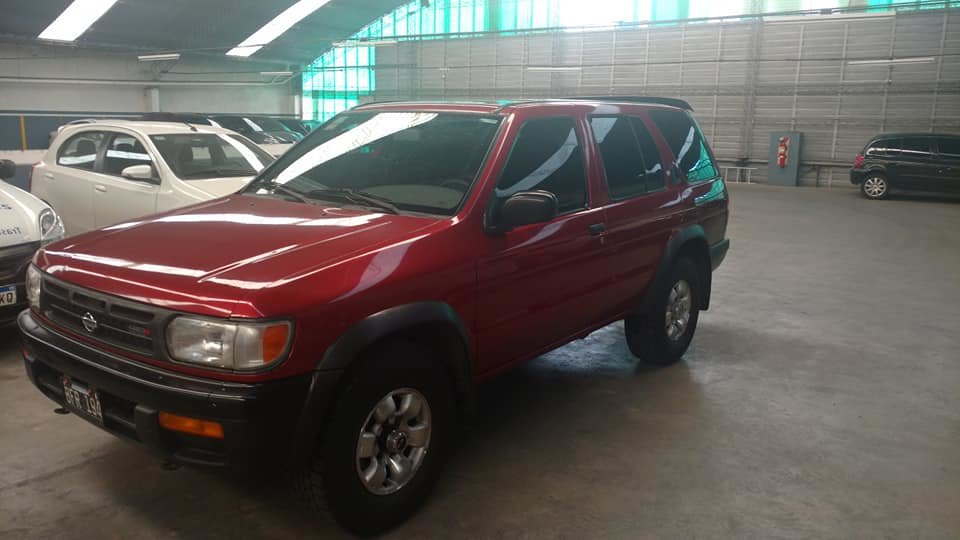
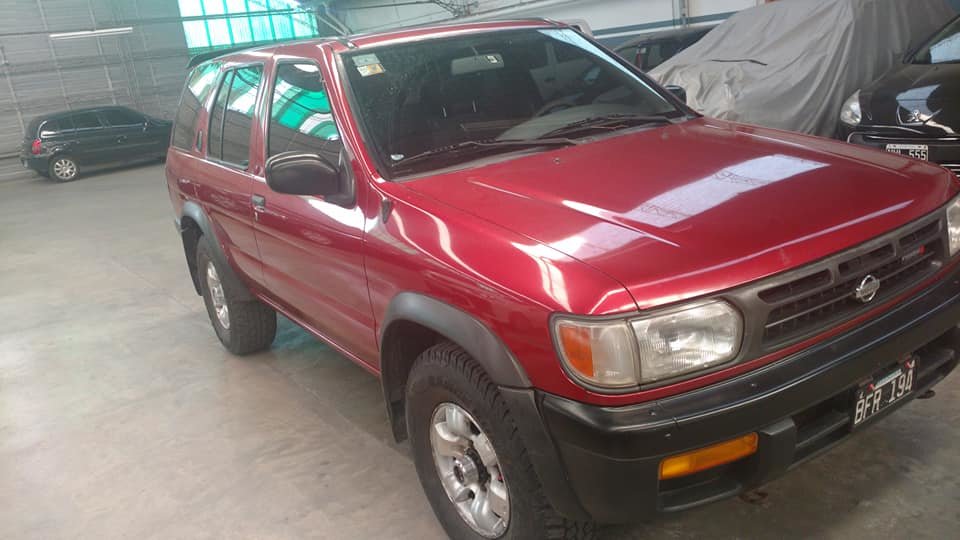 1 point
 -
https://expeditionportal.com/forum/threads/how-to-make-a-cheap-isolated-dual-battery-setup-for-50.77503/ give this a read for sure1 point
-
A helicoil is a coil of stainless metal that effectively has threads in the inside and outside and are thread/pitch specific. What you do is drill out the hole a bit larger, tap it with a helicoil tap (oversized) and then screw the helicoil into the threaded hole until it is flush or recessed to the top of the hole. They form very strong threads and are (were anyway) Mil-spec. They are thread specific so you need to know the exact thread diameter and pitch of what you are repairing. I want to say the threads are M12x1.75 or M14x1.75 but this needs to be verified. Here is an example of helicoils... http://www.mscdirect.com/product/00068387 Here are examples of other types of threaded inserts... http://www.mscdirect.com/products/thread-insert?rdrct=threaded%20insert Go to your biggest/best automotive store (or hardware store if that fails) and go in asking for the specific thread size helicoil, thread saver, threadcert, etc (just brand names) and see what they have, as long as it can be made flush or recessed into the hole, it will work. In all honesty, if you aren't used to drilling/tapping holes or don't feel confident, you might want to take the vehicle and supplies somewhere and have it professionally installed. A proper repair should last forever, but a bungled one will cause bigger problems. B1 point
.thumb.jpg.3351162271e2c1bf86fe7c0c7e657df0.jpg)