- Sign In Changes: You now need to sign in using the email address associated with your account, combined with your current password. Using your display name and password is no longer supported.
- If you are currently trying to register, are not receiving the validation email, and are using an Outlook, Hotmail or Yahoo domain email address, please change your email address to something other than those (or temporary email providers). These domains are known to have problems delivering emails from the community.
All Activity
- Past hour
-
Hi all, Another update on this one. I’ve now spent quite a bit more time going through the factory workshop manual and testing things properly. The symptom is still exactly the same. From a standing start it will hold first gear under even fairly light throttle and just keep revving. The moment I ease off the throttle slightly, it shifts cleanly into second. The same basic behaviour then happens again on the 2-3 shift — it will hold the lower gear until I back off slightly, then it shifts normally. The actual shifts themselves are smooth. So far I’ve checked the following: TPS has been replaced with a known-good unit, and DataScan shows a smooth signal from roughly 0.5V closed to around 4.0V WOT. Transmission fluid has been changed. All five solenoids are within factory resistance spec: Line pressure: 3.4Ω TCC: 13.6Ω Shift A: 25.0Ω Shift B: 25.4Ω Overrun: 24.8Ω All five solenoids respond when 12V is applied directly. This was a bit of a challenge given I had to put my ear against the transmission sump to hear some of them: Red — line pressure solenoid: clicked, but not particularly loudly Blue — TCC solenoid: noticeable click Green — shift solenoid A: very quiet click Yellow — shift solenoid B: very quiet click Grey — overrun clutch solenoid: very quiet click Wiring from B64 back to the TCM measures around 0.2–0.3Ω on all five relevant circuits, so the external harness looks good between the B64 connector and the TCM. I’m not keen to start opening up or pulling out the transmission until I’ve exhausted everything I can reasonably check externally first. I’d really appreciate any guidance if anyone has seen similar behaviour or has anything else they think is worth checking before I go any deeper. Thanks.
- Today
-
I literally did this on my 92 MT last year. I don't know if I'm late to the party, but I wound up pulling my front axle in order to pull the oil pan and seal that up. It also made it significantly easier to replace the rear main unless you're not going to pull the assembly for the seal. I figured since I'm already into it, I might as well seal that up. It is 30 years old after all... I also had some missing and/or non-standard hardware that I replaced with OE appearing bolts vs the goofy ones found at the auto parts stores. To answer one of your questions on replacing the hardware; I would only do it to stuff that appears goobered up or where the threads are galled, and I would go to McMaster-Carr in order to try to find similar hardware to OE. They do carry JS spec hardware. That way you can eliminate the need for that oddball 9, 13, or 15mm bolt head/nut.
-
I've recently developed a bad misfire which appears to pop up as a heat dependent issue. When COLD, Cold, cold, it runs perfectly. After it's heated up (Usually), It misfires on the #4 cylinder consistently. There is spark. I have no real reason to believe it's due to a failed injector, in part because it's rebuilt one that I put in a couple of weeks ago. The ECU seems to think there is no problem with anything. When cold, the ECU flags the Knock Sensor, and Coolant Temperature Sensor (Not sure if that's normal, but they are 30 years old...). Once it's heated up, nothing, nada... Aside from the Cap, Rotor, and wires, is there something else that the computer doesn't pick up that could cause something like this? Would it be worth it to go in after the injector on #4 with a NEW one vs rebuilt? Tune up parts are on order, so I should be able to rule those out quickly.... I say they're all relatively new, but it has been a hot minute since I swapped them out.... like nearly 10 years I think...
-

Steering Column Shroud Finally Broke!
Slartibartfast replied to peejay76's topic in 90-95 WD21 Pathfinders
Yours is just stuck together with maple syrup, eh? - Yesterday
-
I don't know what you all do. I've never broken one of these across owning 3 of these trucks lmao. Crazy americans.
-
Thanks, I will give it a try. Were is the best place to find them ? Jim
- Last week
-
Guessing its been mentioned already, but check soft lines for signs of seeping and also expansion under pressure, or better yet, just replace them given the age. Although not on my Pathy, I've been in that battle where I was beating my head against the wall, until an old timer friend of mine suggested replacing them. And although my bank account argued extensively against it (I was young and very broke), I went ahead and bought replacements. And that seemingly trivial action solved my brake issues.
-
 kwuebo joined the community
 -
OscarMedders joined the community
-
Isaack joined the community
- Earlier
-
Good luck. Sometimes older cars fight us out of spite lol.
-
Thanks very much mate. This response was a great kick start for me. Much appreciated. I've got a copy of the manual, and have started diving in. I can see the B64 connector under the car, and will start by doing some resistance measurements on the solenoids. I agree that is seems odd that those three solenoids would "walk off the job" (I'll be using that saying again in the future" at the same time. Ive also confirmed through DataScan that the TPS is calibrated correctly - showing .5V when closed, and 4.0V at WOT - this is a known working TPS. Thanks again - and hopefully ill be able to report back soon with the fix.
-
1995 D21 Pathfinder V6 engine running rich
Slartibartfast replied to carbotdude's topic in General Forums
A vacuum leak would make it run lean, not rich. Do you have a receipt for the injectors that the first guy put in? I'd be curious where they came from. I have heard horror stories of cheap aftermarket injectors that dump way more fuel than they should do. This would explain the rich condition starting right after that work was done. If you suspect the oxygen sensor is faulty, or getting bad data from air getting into the exhaust, you could rule it out by unplugging the sensor. If the computer knows it's not there, it just won't go into closed loop. It'll run richer than normal, but if bad data from the sensor is the problem, then it'll probably run better than it's running now. That's the flange at the Y pipe, right? Mine failed there too. I've heard of it setting the carpet on fire if it gets bad enough. Mine didn't go that far, but the floor over it was rotted through. The right way to fix it would be torching/cutting/drilling out the fasteners and putting it back together with new bolts, a new gasket, and maybe some exhaust sealant if the surfaces are too pitted to seal. And then there's the way I did it, which involved deciding I couldn't be arsed to deal with all that and instead welding the two flanges together. It doesn't leak, but I'm gonna have to sawzall it apart one of these days when I go after my rear main. Looks like Rockauto has an aftermarket Y pipe assembly listed, if you'd rather not mess with the old crusty stuff. I would still expect it to be a bit of a fight. I would also expect an exhaust shop would be able to sort it out, if you don't want to deal with it yourself. Unless you overheated the holy crap out of it, you don't need to worry about warping the block. It is possible to deform the flanges of the valve covers by overtightening the bolts, but it's also possible to straighten them out again with a little hammer, so that's not the end of the world. Neither fault would cause the rich condition that you are chasing. -
I do not have a service manual that I know is correct for an Aus-market R50. This manual covers the US-spec 2000 R50. Hopefully they're largely the same, because that's all I have to work with. Your decoding of the flashes matches what I'm seeing, and the manual has detailed troubleshooting for each of these codes. The troubleshooting for the torque converter lockup solenoid (AT-148) shows its wiring going from the transmission computer, through connector M71/B51, through B64 (labelled "terminal cord assembly"), to a final plug at the solenoid itself. The wiring for the overrun solenoid (AT-188) and the line pressure solenoid (AT-162) go through the same connectors, and the same harness. Three circuit faults, in the same harness, going through the same connectors, makes me suspect a corroded/melted connector or damage to the harness. Unlikely that three solenoids all walked off the job at the same time. I would check the wiring around the gearbox, see if there's an obvious spot where the harness got smashed or something. Failing that, I expect that chasing any of those three troubleshooting procedures will lead you to the cause of the other two.
-
Hi all. Checking back to see if anyone might have an idea on what might be going on here. I’m a little stumped and my son can’t drive the car as is.
-

Steering Column Shroud Finally Broke!
peejay76 replied to peejay76's topic in 90-95 WD21 Pathfinders
Thank, Slart. I'll try and post a pic of the "repair" when I get to it. And your clamshell sounds like a good idea, I still have one of those anti-theft lockable clamshells from an old GM column. -
Starter Interchange, D21/WD21 & R50/D22/WD22
peejay76 replied to peejay76's topic in 90-95 WD21 Pathfinders
Thank you all! Hopefully the next starter replacement is a long way off, but good to know the shorter-case VG33 starter will work when it's time! -
Hi folks A bit of an issue has popped up with my sons r50. 2000 model with 311,000 kms on the clock. Australian release with VG33E. Great service history and one owner before we got it. It has seemingly been looked after very well for most of its life. The car is struggling with gear changes. From a standing start, accelerating easily on flat ground, it will not shift from first to second. In fact it will rev as far as you let it with just very mild throttle without changing gears. The moment you release from the throttle a touch (not off the throttle completely), it will change gears. When it does change gears the change is normal….not hard. But it will not change until you release the throttle a tiny bit. We have changed out the tps for a known good one. And we have done a full trans fluid change (although wasn’t confident that would be the issue). None of those changes made and difference. I ran the transmission through the diagnostic sequence (so you get the flashes with the O/D OFF light. I do get the 10 flash sequence which shows 6, 7 and 10 getting slightly longer flashes. Online searches seem to indicate Flash 6: Overrun clutch solenoid circuit fault. Flash 7: Torque converter lock-up solenoid circuit fault. Flash 10: Line pressure solenoid circuit fault. I haven’t yet dipped into these codes too much, and am not sure if this is showing me historical or current codes……or both. Before I go too much deeper, I wanted to ask the group if anyone has come across this before, and if so, what was the fix. Or indeed any suggestions. Thankyou.
-
1995 D21 Pathfinder V6 engine running rich
carbotdude replied to carbotdude's topic in General Forums
I took a look underneath the car. I noticed that the exhaust system has rotted a lot. I see that a joint is missing a bolt as shown in the picture below. I also noticed, many months ago, that the metal underneath the driver's seat was scalding hot. Is there anything else that can cause the seat to burn my hand than an exhaust leak? I don't think the car had heated seats. Is there a simple way to rebuild the exhaust? I would like to repair or repair the join? I don't think any of the bolts or gaskets are functioning correctly.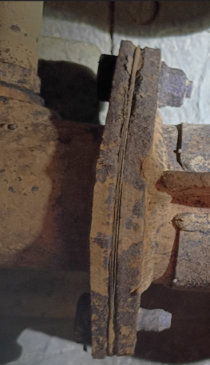
-
1995 D21 Pathfinder V6 engine running rich
carbotdude replied to carbotdude's topic in General Forums
Is it an option to simply remove the O2 sensor? I might be misreading the post below. -
blnk joined the community
-
I will check that out, Thanks Jim
-
Starter Interchange, D21/WD21 & R50/D22/WD22
Slartibartfast replied to peejay76's topic in 90-95 WD21 Pathfinders
I have no experience to add here, but some old posts from Mr. 510 suggest that they all interchange, with the possible exception of the WD21 starter not liking the VG33ER flexplate for some reason. -
Are you looking for an upgrade to the adequate-but-not-great stock brakes, or has something happened that's got your brakes worse than they used to be? I had a knockdown dragout fight with the brakes on mine a while back. IIRC the master was leaking, so I replaced that and the rear flex hose between the frame and the axle, and the rear brakes just kinda quit working. I did a bunch of screwing around. Two-man bled, gravity bled, reverse bled, deleted the abs, put a 2WD Hardbody master in it (same piston size but no internal prop) with a Wilwood external prop because I didn't think the prop in the aftermarket Pathy masters was bleeding right, even replaced the booster. None of it helped. It bled normally, nothing was blocked, and the bleeders were at the top like they're meant to be. With the rear axle on jackstands, in drive, at idle, both feet on the brakes, the rears just spun. I was out of good ideas, so I bought a brake pressure gauge, blew out all the plumbing for the rears with compressed air, and tested pressure at each point down the line, bleeding at the gauge as I went. Right at the master, joiner in the driver's wheel well, where the ABS used to be, splitter at the rear axle. Might've put it at the caliper hoses too, don't remember if I had the fittings for that. The gauge showed full pressure every time (~1500 psi IIRC). With no obvious fault to chase, I hooked the calipers back up, bled them yet again, and somehow the rear brakes started working. I don't know why. All I can think is there was a gob of goo holding an air bubble in a union or something, which all of my prior bleeding had somehow failed to budge. I still hate everything about brake fluid. Hopefully yours is easier to deal with than mine was!
-
 BCangler99 changed their profile photo
 -
It's a SE with disk all the way around. Replace the master cylinder and all the calipers with new pads, also purchased a good bleeder. That leaves the brake booster and proportion valve.
-
skycamper joined the community
-
Steering Column Shroud Finally Broke!
Slartibartfast replied to peejay76's topic in 90-95 WD21 Pathfinders
Yours lived longer than mine did! I have no idea what that metal thing is for. It looks like some engineering went into it, so clearly they expected it to do something. All I know is, I did not include it or replicate it when I fabricobbled a metal clamshell for mine, and my tilt works normally, so it must be something else. The weight may not be helping the clamshell, especially cantilevered out like it is, but I suspect it's got more to do with people whacking their knee on the bulge that the weight sits in. Well, that and the poor design of the screw posts. -
-
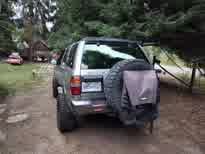
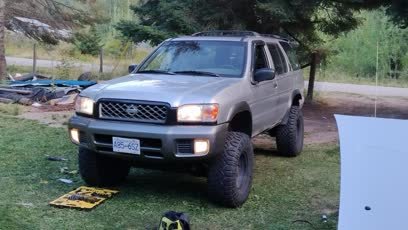
Front end swap Not able to upload photos
-
Thinking of wrapping some spring clamps around it for the time being. What is that metal plate for, which I'm convinced is providing the weight that causes these things to fail in the first place, does it have something to do with the tilt column?