
- Sign In Changes: You now need to sign in using the email address associated with your account, combined with your current password. Using your display name and password is no longer supported.
- If you are currently trying to register, are not receiving the validation email, and are using an Outlook, Hotmail or Yahoo domain email address, please change your email address to something other than those (or temporary email providers). These domains are known to have problems delivering emails from the community.
Leaderboard
Popular Content
Showing content with the highest reputation on 04/14/2024 in all areas
-
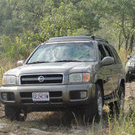
I finally said screw it, let's fix the rust issue. I've got rock sliders in a box, replacement body panels, and a tire carrier sitting around, but I couldn't see myself attaching these all just mere inches from the crusty metal cancer that's been slowly growing over the last 5 years I've owned it. Upon starting the project I had rust holes in the rocker panels that I wish to protect with rock sliders. Lots of crumbly rust around the rear fender flares and a small rust hole in the uniframe in the rear driver wheel well. There was some surface rust and some flakey bits underneath by the spare tire carrier. So I ordered some slip on quarter panels and rocker panels from Nor/Am body parts. First things first, let's attack structural rust so I began by removing the gas tank, fuel filler assembly, evap system, hitch, spare tire carrier assembly, bumper and part of the upper control arm mounting bracket. Next I began opening the hole in the uniframe. Working my way forward... which is downhill, things got better and cleaner so I stopped. Working my way rearward, things stayed crusty. I ended up opening a large section of the uniframe to look inside. It was rusted internally all the way back. That didn't seem to make much sense because you'd figure that the rust problem would be worse in the lower portion of the frame toward the front. Also the exterior of this uniframe rail was in much better shape than inside. Examining the frame rail, I saw the evap system vents into the frame rail. I know for sure that something has always been funky with the evap system because I could smell fresh gas from time to time from the rear of the vehicle despite never having anything be wet or have codes on the dash. I'm assuming the part called a water separator was fouled causing moisture vapor to vent into the frame rail. Ok, so this is gonna be an ordeal to fix. I decide to hit the brakes on that rail and moved to a cross beam that the tire carrier mounts to. I began cutting out the rust to find a fair amount of rust inside this. I stopped cutting when the crusty rust transitioned to mere surface rust. Next the panhard mount on the chassis had some flakey rust so the 'ol hammer test confirms that it's also toast. After releasing the panhard bar I began cutting the lower portion to see how bad it is inside. I lucked out and found that just the lower portion was crusty. This mounting protrustion is connected to a structural cross beam in which, as you guessed, had some crusties. After cutting this open, I find rust at more or less the far ends of this beam where it joins the main frame rails . I'd rather not lop off the entire panhard mounting point, I so I began removing brake lines and fuel lines to clear a path to where I can cut an access hole at the upper most portion of the mounting point. That's more or less where we ended up this week. It's definitely not an exciting project to write about and there's a million other things I'd rather do right now but I figured I'd sort of roll out some updates on this until we get to the finish line. Every time I regretfully walk into the garage, I gotta remind myself my ultimate plan for the vehicle is to keep it forever and keep it in better shape than I originally bought it. The blessings I have working for me right now is the valve covers have always leaked and oil kept most of the rust away from the front as far as I know. Mid section seems ok too. So what's next? More rust cutting, more bracket removing, and possibly divorcing the axle from the body. The axle has a solid amount of rust scale everywhere that would eventually eat the suspension mounting points so that's gonna need some love too. I plant to get to a point where every structural beam is opened up and all crusty sections are cut out with a die grinder or sawzall. After that, everything is getting either the grinder, flap wheel, bore polisher or sandblasted to bare metal. Inevitably there will be trace amounts of rust that would be addressed with phosphoric acid. Apparently this converts Iron Oxide to Iron Phosphate which halts rust progression and becomes a paintable surface. Next step replacement sections of steel will be welded back in. Any female threads that had bolts snap off will be drilled out and re-tapped. Any male studs that broke off in a nut, will be welded back in. After welding and sanding, I'll figure out what rust inhibiting primer to use and apply that. I plan to apply this internally in the rails with a special spray I have. Most likely would finish off the axle and underside with bed liner of some sort. After that, new plastic clips, new extended brake hoses from Taylor, and rubber hoses. Then we can resume with quarter panels, rocker panels and learning how to paint a vehicle. Until next time, peace!1 point